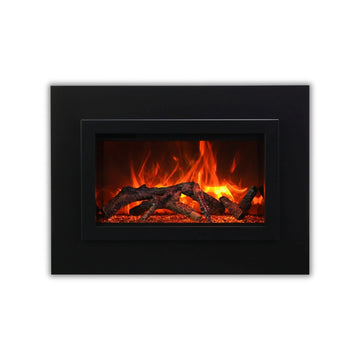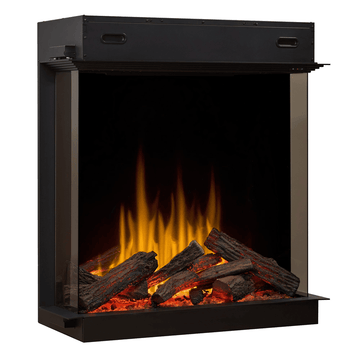

To vent or not to vent, that’s the real fireplace question. In this guide, we break down the key differences between Direct-Vent and Ventless gas fireplaces, so you can make the safest and smartest choice for your space.
What Is a Direct Vent Gas Fireplace?
A Direct Vent gas fireplace uses a completely sealed combustion system. It pulls fresh air from outside your home for combustion and pushes exhaust gases back out — never interacting with your indoor air.
Because the firebox is sealed behind a pane of heat-resistant glass, Direct Vent fireplaces offer:
-
Better indoor air quality
-
Improved safety for homes with kids, pets, or allergies
-
The ability to install in bedrooms, basements, and bathrooms (check local codes)
-
Up to 85% efficiency, depending on the model
Direct Vent systems come in two venting configurations:
-
Co-axial (pipe-within-a-pipe)
-
Co-linear (two parallel pipes — often for retrofits in existing chimneys)
Benefits of Direct Vent Fireplaces:
-
Safer combustion with zero interaction with indoor air
-
Cleaner burning with minimal odors
-
Stylish full-glass fronts and modern flame aesthetics
-
Flexible installation options with the right venting path

What Is a Ventless Gas Fireplace?
Ventless (or Vent-Free) gas fireplaces do not require a chimney or flue. Instead, they burn fuel so efficiently that nearly all byproducts are neutralized before release into the room.
These units draw indoor air into the combustion chamber, then release the heat (and small amounts of water vapor or exhaust) back into the space. That makes them:
-
Extremely efficient (up to 99%)
-
Lower-cost to install — no venting required
-
Flexible for tight installs: kitchens, hallways, open-plan living rooms
However, Ventless fireplaces are not legal in all states, and not recommended for those with respiratory issues, asthma, or chemical sensitivity.
Things to Know About Ventless Fireplaces:
-
May increase indoor humidity
-
May intensify existing household odors
-
Require oxygen depletion sensors (ODS) for safety
-
CO detectors are strongly advised nearby
-
Must meet room-size minimums per local code

Direct Vent vs Ventless: Side-by-Side Comparison
| Feature | Direct Vent | Ventless |
|---|---|---|
| Venting | Requires external vent | No venting required |
| Efficiency | ~85% | Up to 99% |
| Air Quality | Superior — sealed combustion | May affect indoor air |
| Installation Cost | Higher (venting required) | Lower (no vent) |
| Installation Flexibility | Moderate (needs vent path) | High (almost any room) |
| Legal Restrictions | Fewer | Some states ban indoor use |
| Appearance | Realistic flames, glass front | Slightly smaller flames |
| Safety Systems | Built-in glass, sealed combustion | ODS sensor, open combustion |
| Humidity Output | Low | Moderate to high |
Which One Should You Choose?
Your best fireplace choice depends on:
Choose Direct Vent if:
-
You want clean indoor air
-
You’re installing in a bedroom or bathroom
-
You prefer realistic flames and premium styling
-
You’re okay with a slightly higher install budget
Choose Ventless if:
-
You need a budget-friendly install
-
You don’t have access to an external wall or chimney
-
You live in a state where Ventless is legal
-
You're using it as a supplemental heat source
Featured Models Our Customers Love
Kingsman ZCVRB72 72 Inch Linear Direct Vent Gas Fireplace in IPI Ignition
-
50,000 BTUs of customizable heat
-
Contemporary linear styling with driftwood or glass media
-
Multi-function remote and optional blower
-
LED lighting and sealed glass front

Superior VRL4543 Ventless Fireplace
-
39,000 BTUs of 99% efficient heating
-
Linear open-front design with 6 flame settings
-
Remote control, electronic ignition, and safety shutoff
-
Minimal install footprint — ideal for compact spaces

Know Your Local Building Codes
Before choosing any gas fireplace, check:
-
If Ventless units are allowed in your state or county
-
Required room size and ventilation for safe operation
-
Whether bedroom or bathroom installs are permitted
-
CO detector requirements for Ventless units
You can always speak with our certified team for help navigating codes and installation.
Direct Vent vs Ventless Gas Fireplaces FAQ
Is a Ventless gas fireplace safe to use indoors?
Yes, when installed in accordance with the code. However, they do release small amounts of water vapor and exhaust. Not recommended for individuals with asthma or those in small, poorly ventilated rooms.
Can I install a Direct Vent fireplace without a chimney?
Yes! Most modern Direct Vent units use flexible venting that can go through walls or ceilings. Chimneys are optional unless retrofitting.
Which type is more energy efficient?
Ventless units reach up to 99% efficiency. However, Direct Vent units maintain better air quality and burn cleaner in the long term.
Are Ventless fireplaces legal in my state?
Not all states allow indoor Ventless installations. Check your local building codes or contact our team for guidance.
Need Help Choosing the Right Fireplace?
We’re here to make sure you choose the right unit for your room size, lifestyle, and safety needs.